How Mindfulness Helps Us Cope With The News

I had to take a big step back from watching the news a while ago.
I don’t mean that I stopped caring. I cared so much it was affecting me. I felt it in my body. I’d read an article or watch a report and then carry it around with me for the rest of the day.
My chest would feel tight, and I’d have this horrible sense of helplessness and then of course the guilt would kick in. Why aren’t I doing more? How can I help?
And more generally, what was I actually meant to do with all of this?
What am I meant to do with the grief, the fear, the anger, the disbelief?
What can I do with the endless stream of global situations that are horrifying, complicated and far beyond my control?
This is one of the very strange things about being alive now. We know so much. We know about wars as they’re happening. We know about disasters within minutes. We see footage from people’s worst moments. We hear expert analysis, personal opinion, political argument, breaking news and public grief, often all mixed together in the same scroll.
For most of human history, we simply didn’t live like this. We’re not designed to emotionally process the whole world before we’ve even had breakfast.
Of course it affects us.
News, like any other stimulus is an input. The tone of a headline is an input. The dramatic music before a news bulletin is an input. And our body responds to those inputs.
We might think we’re “just catching up with what’s going on in the world”, but our nervous system can experience that as threat, sadness or shock. The mind starts looking for answers. The body feels tense. The breath might become shallow. We might feel angry, numb, anxious or hopeless without even fully realising why.
Then we carry on with our day. With this bubbling under the surface.
So, this is where mindfulness becomes really practical. It helps us to notice the effect of what we’re taking in. It gives us a way of asking, is this helping me stay informed and engaged, or is it flooding me?
Being aware helps us make thoughtful choices. It can help us understand the world, vote carefully, donate where we can, speak up, support others and stay connected to what matters.
And it helps with managing our reactions to the news too.
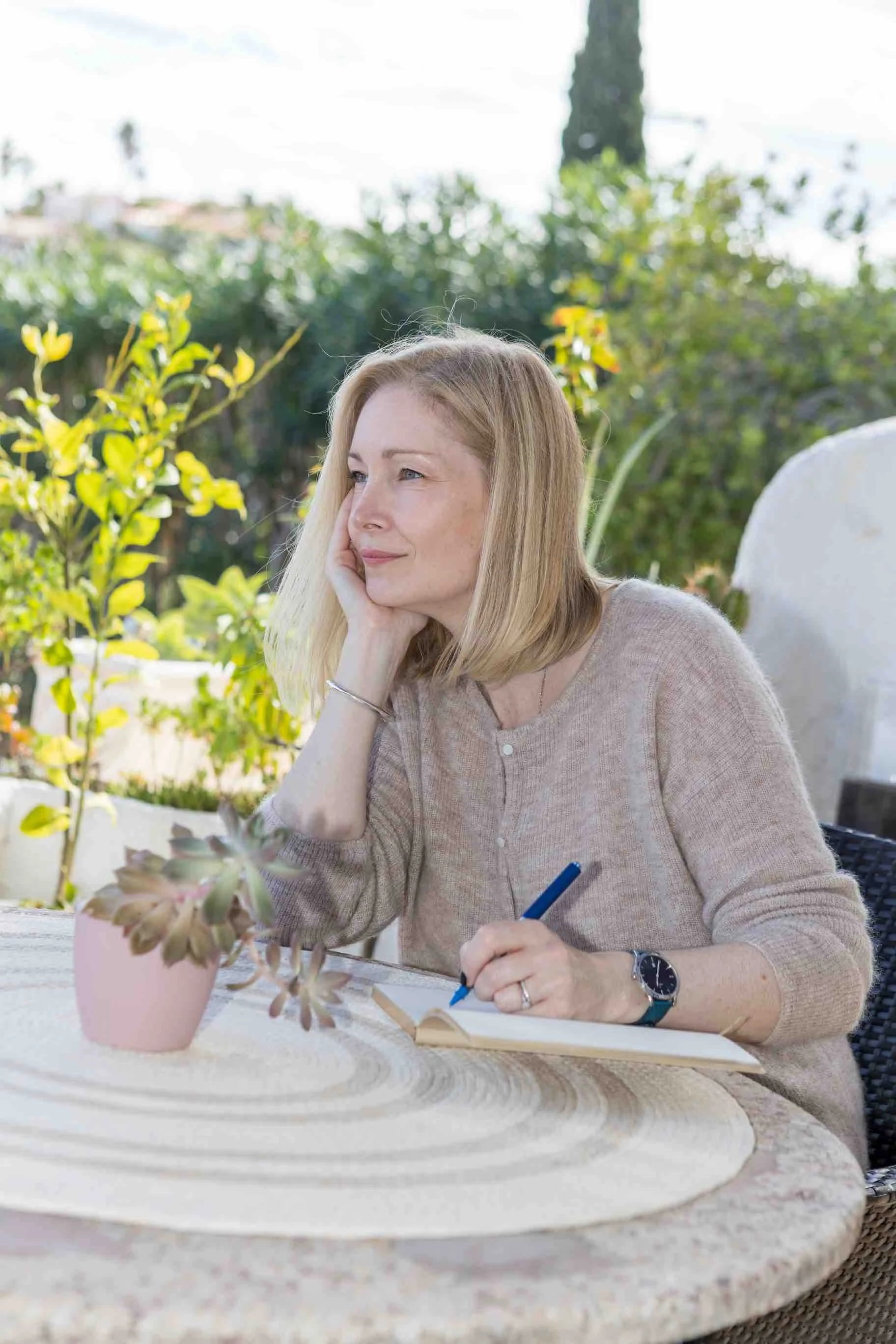
Writing down how I feel is such a simple thing to do, but it always surprises me how much it softens tension.
Buddhist Monk and meditation teacher, Thich Nhat Hanh spoke about mindful consumption. He said we need to be aware of what we take into our mind and body, because what we consume can either nourish us or create more suffering.
We can apply this very well to the news. It doesn’t ask us to turn away from the world. But we can pay attention to what we are letting in, how much, how often, and with what effect.
Sam Harris also talks about mindfulness in a slightly different way, pointing towards the simple but powerful act of recognising what is appearing in consciousness. A thought appears. A feeling appears. Fear appears. Anger appears. A sensation appears in the body. And when we can notice these things as experiences arising in the mind and body, rather than becoming completely identified with them, things begin to change and feel different.
This is so helpful with the news because the it often pulls us straight into reaction. We see something terrible and suddenly the body is involved. The mind is trying to solve it, judge it, argue with it, predict what comes next or protect us from it.
Mindfulness helps us pause and say, this is fear. This is sadness. This is overwhelm. This is helplessness.
That moment of naming can soften the whole experience and give us a little space from being the reaction, to observing it.
If you feel anxious after watching the news, that doesn’t mean you’re weak. If you need to step away, that doesn’t mean you don’t care. If you feel numb, that may be your body protecting you from too much emotional input.
A helpful attitude of mindfulness to apply here is acceptance. Acceptance is not I might add, condoning it. Acceptance simply means acknowledging what is already here. This is such an important distinction.
This situation is happening.
I feel affected by it.
I don’t know what to do.
I wish it were different.
When we allow ourselves to be honest about what’s here, we can respond with more clarity. We might choose to take one small action. Or we might choose to stop consuming more information for today because we’ve reached our limit.
Letting go is also essential. There is so much we can’t hold. We can’t carry every global situation in our body. We can’t solve every global crisis by repeatedly exposing ourselves to distress. Sometimes letting go means putting the phone down. Maybe choosing one trusted news source instead of scrolling through ten. Or saying, I care about this, but I need to protect my capacity to keep caring.
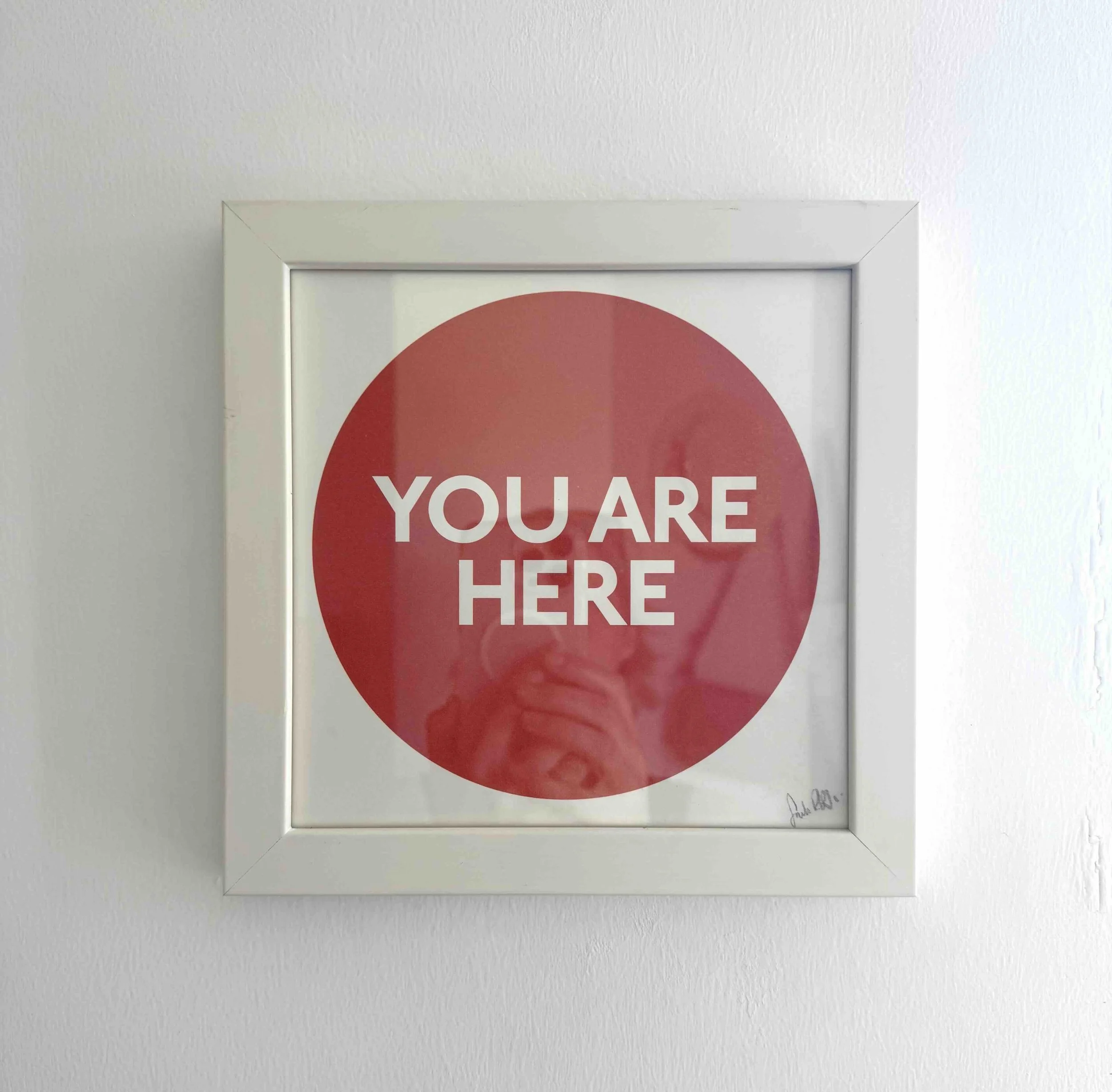
One of the favourite things in my house is this print by the doorway.
🪷 TRY THIS
A simple practice I use and often recommend is to pause after reading or watching something difficult, rather than immediately moving on to the next thing.
Place a hand on your chest or stomach, if that feels supportive. Feel the connection of your hand there. Notice your breath. Let yourself acknowledge what’s happened inside you.
You might say, this has affected me. Or, this is sadness. Or, this is fear.
Then feel your feet on the ground and look around the room you’re in. Notice where you are. Notice one colour, one sound, one part of your body making contact with the chair or floor.
This helps remind the body that although you’ve taken in difficult information, you are here, in this moment, in this place.
Then ask yourself, is there something I want to do now, or can I let this go?
Taking a small action might be to donate, to message someone. It might be to learn more from a reliable source, or just stop reading for today. Maybe to go outside and look up at the sky, to get perspective and regulate the nervous system in nature.
We’re not pretending the world is fine. It’s far from that. But we don’t want to allow the state of the world to completely consume your inner world.
We need to be awake, compassionate and engaged. But we also need to make sure we’re resourced enough to live our life. In the present.
Mindfulness helps us stay connected without becoming completely overwhelmed. It helps us notice what we are consuming, how it is shaping us, and what we can do next.
____________________________________
From me to you
If you found this interesting, and you’d like to explore which mindfulness tools will best support your ideal life, this is how I help people. If you’re curious, I offer a one off session.
About the Author:
I’m Kate, a food and travel lover, former Tinnitus sufferer, Mindfulness Coach and Founder of The Women Entrepreneurs Group. I contemplate the meaning of life and help others to create their ideal time on earth. It’s short after all!
Let’s Connect:
If you feel like there’s a disconnect between your outer and inner world, I understand what that’s like. Book a session and we’ll co-create your bespoke toolkit so that you can glide through life with more ease and joy.